Implats Annual Integrated Report 2018
Implats Annual Integrated Report 2018

OUR OPERATIONS ARE VERY DIFFERENT AND ARE THEREFORE EVALUATED INTERNALLY ON AN INDIVIDUAL BASIS TO UNDERSTAND AND MANAGE THE GROUP. WHERE APPLICABLE, INFORMATION HAS BEEN GIVEN ON A PER OPERATION BASIS TO ADDRESS INDIVIDUAL OPERATIONS’ STAKEHOLDER MATERIAL MATTERS.
In line with good reporting practice, the content of our integrated and sustainable development reports is based on a materiality assessment. For the purposes of this report, items have only been taken into account and reported on, if the effects of these items have materially impacted strategy, the business model, capitals, governance, performance and prospects of the Group and its stakeholders. This is in accordance with the international framework and the materiality background paper for integrated reporting.

Nico Muller
chief executive officer
OUR BUSINESS FOCUS ENSURES THE SUCCESSFUL DELIVERY OF OUR STRATEGY, THE MATERIAL CHANGES TO THE ENVIRONMENT IN WHICH IMPLATS CONDUCTS ITS BUSINESS, AS WELL AS OBSERVATIONS BY KEY STAKEHOLDERS, IDENTIFYING KEY PRIORITY AREAS TO SUPPORT THIS.
| FY2018 | FY2019 | ||
|
|
Having completed my first full year as CEO of Implats, I am more convinced than ever of the fundamental value underlying the business, despite the many challenges the mining sector faces. It is our responsibility, as managers and as miners, to unlock that value and bring it to the fore.
Implats has the advantage of a diverse and competitive asset portfolio, an experienced management team, and a proud history spanning some 50 years. To this we can add exciting future possibilities: the acquisition of a 15% interest in the Waterberg development project is a significant step in advancing the Group strategy towards lower-cost, shallow, mechanisable assets, and we are excited by the long-term potential of our development of Mupani Mine in Zimbabwe, and a restructured and re-energised Impala Rustenburg.
The past year was pivotal for Implats as it embraced and advanced key strategies to align with the Group’s evolving geopolitical and macro-economic landscape. Both jurisdictions in which the Company operates have witnessed encouraging political changes, which will positively influence the industry and the Group’s business interests in the future.
Implats remains confident in the long-term fundamentals for PGM demand with future opportunities for palladium back-substitution with platinum in the manufacture of catalytic converters. However, platinum price support is not expected in the near term and the Group has aligned Company strategies accordingly.
Current market fundamentals require much improved industry discipline, particularly in discontinuing unprofitable production. Implats cannot, and will not, support lossmaking production and the remarkable return to positive Group contributions from Marula, as well as the restructuring decisions announced at Impala Rustenburg are therefore very pleasing.
Internally, the Group is reprioritising and rescheduling capital allocation decisions and focusing on effective cash management to protect the balance sheet.
Key business focus areas include improved organisational effectiveness through enhanced accountability, performance management and effective strategic decision making. Social responsibility, elimination of harm to the health and safety of employees and preventing negative impact on the environment underpins the Group’s operating philosophy and remain key imperatives.
In addition, other initiatives have been progressed this past year, including:
The most significant step in the transformation of the Group, however, was announced after year-end when the findings and recommendations of the Impala Rustenburg strategic review were released. Taking account of the current operating environment and macro-economic realities, the outcome concluded that a radical and urgent transition into a leaner, more concentrated and profitable operation is critical to support the future success of the Group.
The implementation of the Impala Rustenburg plan will be phased in over the next two years to ensure the transition occurs in a socially responsible manner. The key outcomes of the restructuring, which is expected to be concluded by the end of the 2021 financial year, include:
This plan is expected to deliver a safer and profitable Impala Rustenburg centred on its best assets with higher quality, long-life orebodies, lower operating costs and capital intensity. Importantly, it secures employment for 27 000 employees and surrounding communities can continue to participate in Implats’ procurement, training and local economic development activities.
The phased approach to the implementation of the Impala Rustenburg restructuring plan will allow for further options to be explored and afford each shaft the opportunity to improve profitability, while allowing time to consult with government, unions and other stakeholders before any final decision is made to close or exit an unprofitable shaft.
For the most part of the past decade, the platinum market has been oversupplied. The drop-off in demand for diesel passenger cars in Western Europe and the steady contraction in the Chinese jewellery market have contributed to a sustained lower platinum price over the past three years, with consensus forecasts for softer platinum demand for at least the next three years. Over the much longer term, fuel-cell technology presents an upside for platinum, as does the European Union’s inclusion of PGMs on its list of “critical raw materials”.
The immediate fundamentals for both palladium and rhodium remain strong, largely due to expected growth in the global internal combustion engine automotive market and tighter emissions regulations. In what is currently a close-to-balanced market, forecasts now see palladium and rhodium moving into relatively deep deficits sooner than previously expected.
The socio-political context in the countries in which we operate – South Africa and Zimbabwe – remains dynamic. Compared to my report last year, there is considerably more optimism and regulatory certainty in both jurisdictions.
In Zimbabwe, Zimplats concluded the release of ground north of portal 10, which does not form part of its 30-year mine plans. At the same time our special mining lease (SML) was successfully converted into two new mining leases, which, combined with partial relief on export levies, will enable the Zimbabwean assets to sustain and grow future financial returns.
The newly gazetted Mining Charter has provided some level of certainty in the South African policy and regulatory framework. A more collaborative and trusting environment is being established, which enhances the likelihood of constructive outcomes that will attract investors back to the mining sector. The Group remains committed to collaboration with all stakeholders to ensure an attractive and sustainable industry.
We have paid considerable attention at executive level to the community activism at our operations, stemming from the high levels of inequality in South Africa, the relatively slow pace of government service delivery, and the consequent demands on mining companies to increasingly provide jobs, procurement contracts, infrastructure, and health and education facilities. Implats remains deeply committed to advancing its social licence to operate and to its community commitments as outlined in its social and labour plans (SLPs), and we routinely go beyond these commitments.
We are pleased to report that our community and stakeholder engagement activities during the year have resulted in fewer disruptions and much-improved relationships with our labour-sending communities and government at all levels.
We continue to engage at all levels in both countries to encourage the growth and predictability necessary to ensure that Implats continues its significant contribution to economic growth in South Africa and Zimbabwe.
The safety and health of employees remains a priority. Safety for the year under review was a tale of two halves. Regrettably, five employees at Impala Rustenburg and one at Marula suffered fatal injuries at our operations during the six months ended 31 December 2017. Another employee was fatally injured at Impala Rustenburg during January 2018. The Implats board and management express their Implats Annual Integrated Report 2018 78 sincere condolences to the families, colleagues and friends of the deceased. The Group will continue to provide support to the dependants of the deceased.
Over the year, safety measures were tested, enhanced and altered, where necessary. Safety communication to employees has been improved and the emphasis remains on ensuring effective leadership, responsible behaviour, and driving a culture of personal accountability and interdependence. Ongoing collaboration with key stakeholders and a shared vision of zero harm will continue to drive further improvements through awareness, education, and the implementation of appropriate systems and best practice.
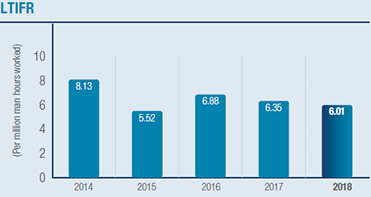
This renewed level of focus on safety resulted in a better performance during the second half, which saw a significant improvement in all leading and lagging safety indicators, and the Group operated for seven months without a fatal accident – an Implats record.
Many individual business units continue to deliver exceptional safety performances, setting new records in some cases. At year-end, 11 of Implats’ 17 operations had “millionaire” or “multi-millionaire” status, meaning they have operated more than a million shifts without a fatality. Our strategic focus continues to be on an improved safety performance, at Marula and Impala Rustenburg in particular, and we have seen a positive change in behaviour, which will be further embedded.
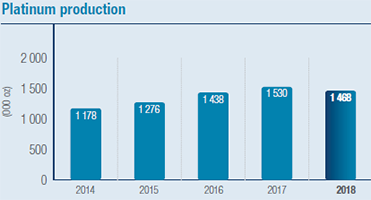
The Group achieved encouraging operational improvements over the year. Platinum ounces in concentrate were 1% higher at 1.57 million platinum ounces (FY2017: 1.56 million). This was mainly due to improved operational performances from Impala, Marula, Mimosa and IRS, while Zimplats and Two Rivers reported lower contributions.
Refined platinum production was impacted by a temporary stock build-up of some 77 000 platinum ounces at Impala Rustenburg, which remains available for sale in the next financial year. This inventory was built up following furnace maintenance undertaken during the first half of the financial year and an electrical failure at number 5 furnace in February 2018.
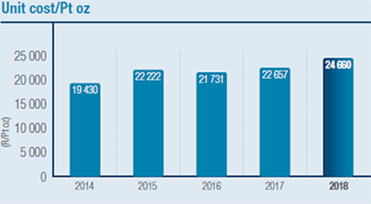
Costs were well contained and, on a stock-adjusted basis, were largely unchanged at R22 931 per platinum ounce. The Group spent R4.6 billion (FY2017: R3.4 billion) on capital projects during the year, which is 34% higher than last year. This was largely due to higher spend on 16 and 20 Shafts and Zimplats’ Mupani Mine. Impala Refining Services (IRS) maintained its significant cash generation to the Group, delivering more than R1 billion.
Operational performance was negatively impacted in the first half of the year by mine stoppages following five fatal incidents during September and October 2017. A major furnace rebuild was undertaken on one of the three operating furnaces at the smelting complex in the first half of the year. In February 2018, an electrical failure triggered a fire at the number 5 furnace transformers.
Impala made a gross loss of R2.79 billion in FY2018, a 4% improvement from the R2.91 billion loss for FY2017. Capital expenditure increased by 12% to R2.77 billion (FY2017: R2.47 billion) mainly due to increased spend at 16 and 20 Shafts, as well as refurbishment and repair work at the number 5 furnace. The 16 and 20 Shaft projects are critical to returning Impala Rustenburg to profitability.
Some construction work at 20 Shaft remains outstanding and the project is now approaching completion. Production at 16 Shaft ramped up significantly during the year due to increased face availability.
The operational and financial turnaround at Marula is under way, driven by improved cost management and assisted by a stronger rhodium price, which is now expected to remain robust going forward. In addition, the Marula team’s continued efforts to engage with communities has resulted in a more stable community environment. The community chrome dispute was resolved, and the chrome project restarted in January 2018. With almost no disruptions during the period under review, Marula achieved its performance targets and saw vastly improved production.
We continue to closely monitor the situation at Marula and engage with the community to ensure the operation can remain a valued part of the Group.
Implats’ Zimbabwean assets – Zimplats and Mimosa – are better placed to generate financial returns through the quality of the Mineral Resource and asset base, the potential for better efficiencies, the skilled and experienced leadership and operating teams, as well as a changing political and economic environment. These factors have all contributed to a more conducive environment to generate improved cash flows and shareholder returns.
Zimplats secured tenure via two new mining leases, the redevelopment of the Bimha Mine was completed with full production reached in April 2018, and the development of the US$264 million Mupani Mine (Portal 6), which will sustain mining well into the future, is on track to reach full production in 2025. Zimplats sustained its excellent safety and production performance, but platinum production was down 4% impacted by a small lock-up in the smelter.
Mimosa delivered another strong operating and safety performance.
Two Rivers maintained its safe, low-cost level of mining production, although the planned mining of low-grade split-reef areas and consequential lower recoveries impacted the operational performance during the year. It maintains a strict focus on grades as it mines into the split-reef areas.
Impala Refining Services (IRS), continued its stellar contribution to the Group’s bottom line. Implats is well positioned to leverage spare processing capacity for increased production output throughout the Group, as well as third-party suppliers, to continue growing the IRS business and ensure ongoing, strong cash flows.
For financial 2018, Group revenue was down 3%, impacted by lower sales due to inventory build-up and a stronger rand, and partially offset by a higher dollar basket price. The build-up in the pipeline and well-controlled operating costs resulted in gross profit of R1.6 billion, a marked improvement over the loss of R529 million in the comparable period. However, impairments of R13.63 billion, mostly in respect of the Impala Rustenburg asset, resulted in a loss after tax of R10.79 billion.
A material consequence of the declining profitability of the Impala Rustenburg operation has been the negative impact on the Group’s balance sheet. Net debt (excluding finance leases) has increased to R5.33 billion – underlining the strategic imperative to radically transform the Impala Rustenburg complex.
At year-end, the Group had adequate headroom of R6.2 billion comprising gross cash on hand of R3.7 billion (FY2017: R7.8 billion) and R2.5 billion in unutilised bank debt facilities. The R4 billion revolving credit facilities and the convertible bonds mature in 2021 and 2022, respectively. The Group remains well within all its debt covenants.
The operating philosophy at Implats is underpinned by a value system centred on long-term sustainability. Interventions to reduce the impact of TB and HIV/Aids on our employees have had positive results, with a 43% reduction in new pulmonary TB cases recorded over the past five years and a 51% decline in Aids-related deaths since 2014. No major environmental incidents were recorded during the past year and minor incidents reduced by 13%. Water recycling exceeded Group targets and ended the year on a record high of 45% of total consumption.
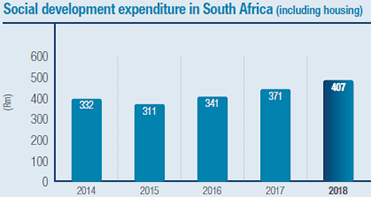
Host communities remain vital stakeholders and social investment expenditure has escalated by nearly 30% year-on-year at the South African operations, despite the challenging financial conditions. Implats’ focus remains on housing, education, health and training. The Group is cognisant of the economic challenges faced in most of the platinum producing areas and recognises the importance of a continued contribution during these times. Implats delivered effectively on our social and labour plan (SLP) commitments at the South African operations, and our targeted corporate social investments in Zimbabwe. We are proud of our contributions to our host communities and our ability to positively influence socio-economic development in our emerging economies.
Our South African operations are collaborating with key stakeholders on development of their third generation, five-year SLPs.
Creating a high-performance culture is crucial to the success of the organisation. We aspire to be a more decisive and agile Group, willing to take the necessary bold decisions. We are creating a clearly defined and high-performance “Implats way” – a desired culture to assist operations drive required behaviours – which will be entrenched in all business practices and purposefully practiced.
Implats also conducted an organisational design review to determine how best it should be structured to best meet its strategic objectives. The project has a Group-wide focus and includes proposed structural changes, reporting relationships, role profiling, job evaluation and grading.
Remuneration policies have received attention and are now more geared to aligning shareholder expectations with management delivery.
Importantly, our employment equity status for the executive committee team has increased from 25% to 55% black representation, with 27% black female representation, thus exceeding the new Mining Charter requirements and positioning the Company well in a changing mining environment.
Creating a high-performance culture is crucial to the success of the organisation. We aspire to be a more decisive and agile Group, willing to take the necessary bold decisions. We are creating a clearly defined and high-performance “Implats way” – a desired culture to assist operations drive required behaviours – which will be entrenched in all business practices and purposefully practiced.
Implats also conducted an organisational design review to determine how best it should be structured to best meet its strategic objectives. The project has a Group-wide focus and includes proposed structural changes, reporting relationships, role profiling, job evaluation and grading.
Remuneration policies have received attention and are now more geared to aligning shareholder expectations with management delivery.
Importantly, our employment equity status for the executive committee team has increased from 25% to 55% black representation, with 27% black female representation, thus exceeding the new Mining Charter requirements and positioning the Company well in a changing mining environment.
Implats is well positioned to advance its value-focused strategy to position the Company for a future low metal price environment, to lead the industry in cost and safety performance, and to create and share value sustainably with all stakeholders throughout the commodity cycle.
We have a robust defence strategy against the recent major shifts in platinum use in the automotive and jewellery sectors. With a restructured and substantially enhanced Impala Rustenburg operation, the Group is well positioned to grow its exposure to lower-cost, mechanised operations at Zimplats, Mimosa, Two Rivers and potentially Waterberg, to deliver enhanced shareholder returns in a lower metal price environment.
The strategy increases Implats’ future fundability by maintaining current debt covenants and reducing the need for external funding, while ensuring sustained jobs through this low metal price environment and that surrounding communities can continue to participate in Implats’ procurement, employment and other activities. The Group is also pursuing higher-margin downstream beneficiation opportunities using spare surface asset capacity at IRS.
|
Ownership
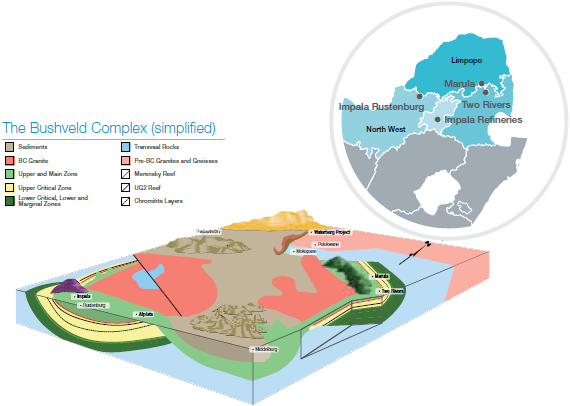
Impala has operations on the western limb of the world-renowned Bushveld Complex near Rustenburg in South Africa. This operation comprises a 10-shaft mining complex and concentrating and smelting plants. The base and precious metal refineries are situated in Springs, east of Johannesburg. |
| 580 800oz
Refined Pt production |
 |
| 0.071
FIFR |
6
Fatalities |
| 14.04
TIFR |
39.6%
Contribution to Group platinum production |
|
6.54
LTIFR |
>15 years
Life-of-mine |
|
870m
Average current depth |
|
|
40 079
Number of employees |
|
Ownership
Impala Refining Services is a dedicated vehicle to house the toll refining, metal concentrate and matte purchases built up by Implats. IRS provides smelting and refining services through offtake agreements with Group companies (except Impala) and third parties. IRS is situated in Springs, east of Johannesburg. |
|
Ownership
Marula is one of the first operations developed on the relatively under-exploited eastern limb of the Bushveld Complex in South Africa. Marula is located in the Limpopo province, some 50 kilometres north-west of Burgersfort. |
| 85 100oz
Pt in concentrate |
|
| 0.121
FIFR |
1
Fatalities |
| 24.18
TIFR |
5.2%
Contribution to Group platinum production |
|
11.63
LTIFR |
>15 years
Life-of-mine |
|
300m
Average current depth |
|
|
3 988
Number of employees |
|
Ownership
Two Rivers is a joint venture and is situated on the southern part of the eastern limb of the Bushveld Igneous Complex some 35 kilometres south-east of Burgersfort in Mpumalanga, South Africa. |
| 165 500oz
Pt in concentrate |
|
| Nil
FIFR |
0
Fatalities |
| 4.65
TIFR |
11.1%
Contribution to Group platinum production |
|
2.15
LTIFR |
>20 years
Life-of-mine |
|
*Non-managed |
400m
Average current depth |
|
Ownership
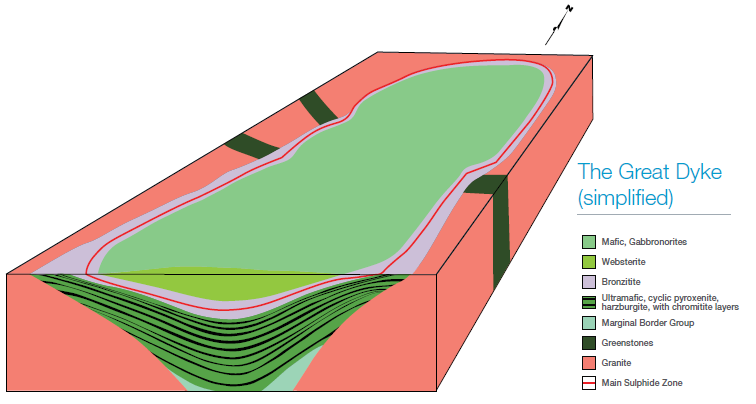
Zimplats’ operations are situated on the Zimbabwean Great Dyke south-west of Harare. Zimplats operates four underground mines and a concentrator at Ngezi. The Selous Metallurgical Complex (SMC), located some 77 kilometres north of the underground operations, comprises a concentrator and a smelter. |
| 270 800oz
Pt in concentrate (including concentrate sold) |
|
| nil
FIFR |
0
Fatalities |
| 0.52
TIFR |
18.1%
Contribution to Group platinum production |
|
0.19
LTIFR |
>30 years
Life-of-mine |
|
240m
Average current depth |
|
|
6 445
Number of employees |
|
Ownership
Mimosa is jointly held by Implats and Sibanye-Stillwater. Its operations are located on the Wedza Geological Complex on the Zimbabwean Great Dyke, 150 kilometres east of Bulawayo. The operation comprises a shallow underground mine, accessed by a decline shaft, and a concentrator. |
| 125 000oz
Pt in concentrate |
|
| nil
FIFR |
0
Fatalities |
| 0.93
TIFR |
7.9%
Contribution to Group platinum production |
|
0.22
LTIFR |
>15 years
Life-of-mine |
|
180m
Average current depth |
|
| * Non-managed |

Implats is a leading Producer of platinum And associated platinum Group metals (PGMs)
| Total Implats | ||
| 1 468 100oz Refined Pt production |
||
| 0.065 FIFR 12.857 TIFR 0.065 LTIFR 7# Fatalities 50 512 Number of employees AFPLATS Ownership
|
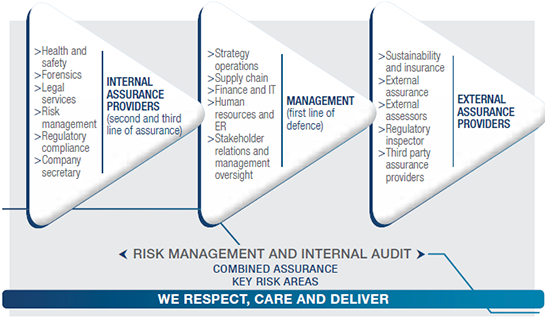
TTHE IMPLATS BOARD IS COMMITTED TO PROVIDING ETHICAL AND EFFECTIVE LEADERSHIP TO THE GROUP. THE BOARD FULLY EMBRACES THE PRINCIPLE OF ETHICAL LEADERSHIP IN SETTING AND IMPLEMENTING THE STRATEGY AND THE GROUP’S APPROACH TO GOVERNANCE, GUIDED BY THE PRINCIPLES OF THE KING IV CODE ON CORPORATE GOVERNANCE (KING IV).
It is vital we maintain the highest standards of good governance to promote quality decision-making and the execution of those decisions within a disciplined framework of policies, procedures and authorities. This is even more important in challenging times. Good governance exists in an environment where roles and responsibilities are clearly defined, forums are conducive to robust debate and performance is regularly reviewed. We outline our progress and describe our governance efforts over the next few pages.
The Implats board is committed to providing effective leadership to the Group. The Implats board embraces the principles of ethical leadership in setting and implementing Implats’ strategy and is guided by the principles of the King IV Code on Corporate GovernanceTM* (King IV), the Companies Act, 2008, the JSE Listings Requirements and all other applicable laws, standards and codes. A compliance schedule can be found at www.implats.co.za.
The Implats board exercises independent judgement on all issues reserved for its review and approval, while simultaneously considering the needs of all stakeholders, and takes full responsibility for the management, direction and performance of the Group.
To ensure we make and execute good decisions, which are transparently in the interest of Implats, its shareholders and other stakeholders, the Implats board works continuously to maintain and develop its governance framework.
Dr Mandla SV Gantsho
Chairman framework.
* Copyright and trademarks are owned by the Institute of Directors in Southern Africa NPC and all of its rights are reserved.
Implats is a focused PGM producer and supplier. Our strategy seeks to sustain optimal levels of production at the lowest possible cost from a diverse and competitive asset portfolio. We seek to position the Company in the lower half of the industry cost curve, and as the industry safety leader, to benefit from future stronger PGM prices and to reward all our stakeholders
KPI OVERVIEW
| Operational strategies |
| Performance target for FY2017 |
| Performance against strategy and KPIs |
| Performance graphs* |
| Relentlessly drive the safety of our people |
|
|
| Consistently deliver production targets |
|
|
| Improve efficiencies through operational excellence |
|
|
| Cash conservation |
|
|

| Maintain our licence to operate |
|
|