
Annual Integrated Report for the year ended 30 June 2024
Annual Integrated Report for the year ended 30 June 2024

NICO MULLER, CHIEF EXECUTIVE OFFICER
Implats benefited from past investments into our people and assets, which underpinned the strong operational delivery at our key mining and processing assets during the year, and provided the flexibility to take measured action in response to soft metal pricing.
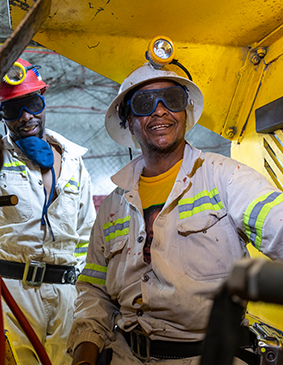
We remain focused on delivering safe and profitable and production – operational planning and capital investment is structured to enhance the competitive positioning of each asset to maximise returns and limit the use of the balance sheet to cross-subsidise loss-making operations.
We delivered solid production and commendable cost control during the financial year, despite navigating several serious challenges and a constrained operating environment characterised by macro-economic headwinds and persistently low prices for platinum group metals (PGMs). Our journey to zero harm, however, suffered a significant setback, with the Group’s safety performance dominated by the devastating 11 Shaft tragedy at Impala Rustenburg in November 2023.
Key highlights for the year included completing the acquisition of the remaining shareholding in Royal Bafokeng Platinum Limited (RBPlat), now Impala Bafokeng, and concluding a landmark broad-based black economic empowerment (B-BBEE) transaction, for value, which has meaningfully broadened economic participation in our mining and processing assets. We completed the first 35MW of our utility-scale solar power plant at Zimplats and progressed our sustainability journey. Pleasingly, we received several independent accolades in the period, in recognition of our excellent environmental, social and governance (ESG) management.
The Group generated EBITDA of R12.4 billion, headline earnings of R2.4 billion or 269 cents per share and recorded a free cash outflow of R4.0 billion, after incurring cash capital spend of R12.3 billion in the period. The Group’s strong balance sheet positioning was sustained, with closing adjusted net cash of R6.9 billion. No dividend was declared in line with the Group’s dividend policy.
Despite the challenging operating environment, Implats delivered a resilient performance and ended the year well-placed to continue creating value with our stakeholders.
Implats’ safety performance was dominated by the 11 Shaft tragedy in the first half of the year, in which 13 of our colleagues lost their lives and a further 73 employees were injured following an accident involving a personnel conveyance. With deep regret, we report that an additional six employees lost their lives in unrelated incidents at managed operations in FY2024, bringing the Group’s reported fatalities to 19 in the period. As a result, Implats’ fatal injury frequency rate deteriorated to 0.127 per million man-hours worked (FY2023: 0.040).
The board of directors and management team have extended their heartfelt condolences to their families and the Group offers them ongoing support. Investigations into the 11 Shaft incident are ongoing while investigations into the remaining incidents were completed and remedial actions implemented.
The lost-time injury frequency rate improved by 1% to 3.89 per million man-hours worked and the Group recorded a 10% improvement in the total injury frequency rate of 3.89 per million man-hours worked in FY2024.
Implats’ value-focused strategy seeks to facilitate the agility and resilience necessary to navigate a dynamic global, operating and metal price environment, enabling the Group to serve the evolving markets for its primary products and create and share value for its key stakeholders.
Our strategic imperatives are premised on delivering a robust and resilient portfolio, underpinned by prudent capital allocation and supported by a strong balance sheet. These principles guided management’s action over the past year to deliver a range of strategic responses to ensure that Group production and planning parameters were proactively adjusted to sustain business viability, enhance competitive positioning and deliver optimal returns and shared value for all stakeholders.
Constrained PGM pricing required a critical focus on capital expenditure, with the project portfolio geared towards ensuring asset integrity, preserving operational flexibility and efficiency, maintaining ore reserve flexibility and ensuring statutory compliance. Projects key to advancing Implats’ strategic aspirations in both beneficiation and renewable energy were prioritised for completion.
Key highlights for FY2024 included completing the acquisition of the remaining shareholding in RBPlat, now Impala Bafokeng, and concluding a landmark B-BBEE transaction, for value, which has meaningfully broadened economic participation in our mining and processing assets.
Implats’ value-focused strategy seeks to facilitate the agility and resilience necessary to navigate a dynamic global, operating and metal price environment, enabling the Group to serve the evolving markets for its primary products and create and share value for its key stakeholders.
During FY2024, a Group restructuring process commenced to rationalise and optimise labour deployment with appropriate staffing levels across corporate and operational functions. Labour restructuring at Impala Canada and Zimplats was completed, and a Section 189(3) consultation process (s189) was initiated during Q4 FY2024 across the South African managed operations – Impala Rustenburg, Impala Bafokeng, Marula and the corporate office – and completed in July 2024. Natural attrition, together with re-deployment, reskilling efforts and the uptake of voluntary separation packages, ensured no employees were forcibly retrenched.
In addition, operational strategies for several assets were amended:
Against the backdrop of a challenging year, we were immensely proud to conclude a strategic B-BBEE transaction ensuring broad-based ownership in the mine-to-market PGM value chain. Equity ownership at Impala (which includes Impala Rustenburg, Impala Refineries and Impala Refining Services) and Impala Bafokeng is via an employee share ownership trust (4%), a community share ownership trust (4%) and a strategic empowerment consortium, Bokamoso (5%), led by Siyanda Resources Proprietary Limited (Siyanda).
We continue to monitor and evaluate the future demand landscape for our primary PGM and associated base metal production, ensuring the current and future asset portfolio allows the Company to adapt and thrive in a cyclical sector, which faces both existential threats and tremendous opportunities as demand patterns shift in response to the global imperative to decarbonise. Current efforts are centred on the consolidation of the existing portfolio – and assessing incremental partnerships and transactions to improve our competitive positioning and leverage our processing assets.
Implats navigated several serious challenges and a constrained operating environment to deliver guided production volumes and commendable cost controls. Achieved volumes benefited from the maiden annual consolidation of Impala Bafokeng. However, notable performances were achieved on a like-for-like basis (excluding Impala Bafokeng’s contribution) at our key mining and processing operations.
Tonnes milled at our managed operations increased by 17% to 27.89 million tonnes (FY2023: 23.88 million tonnes) and were up 1% on a like-for-like basis, with higher milled volumes at Zimplats and stable tonnage at Impala Rustenburg offsetting the impact of re-based production volumes at Impala Canada and safety-impacted throughput at Marula.
6E production at managed operations increased by 21% to 2.92 million ounces (FY2023: 2.42 million ounces), with like-for-like gains of 2%. The Group’s JV operations increased 6E concentrate production by 1% to 547 000 ounces (FY2023: 541 000 ounces). Mimosa benefited from plant optimisation, but Two Rivers delivered lower volumes due to constrained mining flexibility from challenging geological conditions. Third-party 6E concentrate receipts declined by 34% to 191 000 ounces (FY2023: 287 000 ounces) as two contracts were terminated in Q3 FY2023.
In total, Group 6E production increased by 13% to 3.65 million ounces (FY2023: 3.25 million ounces) and was 1% lower on a like-for-like basis.
Refined 6E production, which includes saleable ounces from Impala Bafokeng and Impala Canada, increased by 14% to 3.38 million 6E ounces (FY2023: 2.96 million 6E ounces) and was 2% higher on a like-for-like basis. Mining and processing performance benefited from a notable reduction in the frequency and intensity of load curtailment in South Africa, but Zimbabwe experienced heightened electricity supply constraints.
Going forward, Group processing capacity was limited by the scheduled rebuild of the Number 5 furnace in the period at Impala Rustenburg. Maintenance was initiated in December 2023 with the furnace successfully recommissioned as planned in April 2024. All three furnaces at Impala Rustenburg have been successfully rebuilt between FY2022 and FY2024, with excess concentrates and matte stockpiled for future refining and sale. Implats ended the period with an excess inventory of approximately 390 000 6E ounces (FY2023: 245 000 6E ounces).
Group processing capacity will benefit from higher annual available capacity at Impala Rustenburg and will be bolstered by the commissioning of the new furnace at Zimplats in H1 FY2025. This will facilitate the steady release of excess inventory over the FY2025, FY2026 and FY2027 reporting periods.
Mining inflation, the maiden annual consolidation of Impala Bafokeng costs and the translation of the dollar cost base of Zimplats and Impala Canada offset the benefit of volume gains and cost-containment measures delivered at managed operations. Group stock-adjusted unit costs increased by 5% to R20 922 per 6E ounce (FY2023: R19 834 per 6E ounce) and were 3% higher on a like-for-like basis (excluding Impala Bafokeng and the discretionary employee bonus paid in FY2023).
Capital expenditure at managed operations rose by 22% to R14.0 billion (FY2023: R11.5 billion) as annual spend at Impala Bafokeng was consolidated in the period and expenditure on growth projects at Zimplats accelerated, offsetting reduced capital expenditure at Impala Rustenburg, Impala Canada and Marula. Read the COO’s review on page 94 for a full overview of our project pipeline and the individual performances of our operations.
Notable rand depreciation compounded the impact of high consumable and utilities inflation on the translated cost and capital expenditure at Zimbabwean and Canadian operations. Total cash operating costs increased by 19%, while unit costs benefited from higher throughput at managed operations and, despite lower refined output, increased by 14% to R19 834 per 6E ounce (FY2023: R17 364 per 6E ounce).
The benefit of strong operational delivery, however, was offset by significantly weaker US dollar sales revenue. Sharply lower average palladium and rhodium pricing negated higher sales volumes and the benefit of a weaker average rand. Reported financial metrics were also negatively impacted by several once-off cash and non-cash charges in the period. Please read the full account of our financial performance in the CFO’s review on page 80.
Lacklustre primary production and softer-than-expected secondary supply resulted in tighter-than-expected PGM markets in calendar year 2023, despite disappointing pricing over the period, with deficits in platinum, palladium and rhodium. Pent-up demand and fading supply chain constraints supported significantly improved global light-vehicle production, which bolstered automotive offtake and offset lacklustre industrial demand for palladium and rhodium and the softening investment demand for platinum.
Despite headline market deficits, significant pricing dislocations were caused by industrial and automotive end-users who destocked portions of their PGM inventory, as well as metal discounting as trade flows shifted from West to East. Negative precious metal investor sentiment and burgeoning speculative positioning amplified these factors.
All three major PGM markets are likely to remain in fundamental deficits in calendar year 2024, although market shortfalls are expected to ease from those witnessed in 2023 – automotive production growth is expected to moderate, industrial demand is expected to be marginally lower as capacity expansions ease, and supply is expected to stage a modest recovery on improved auto catalyst scrap collections. However, the pricing impact of continued industrial and automotive original equipment manufacturer (OEM) destocking will continue to heavily influence physical market tightness over the remainder of the calendar year, as will the trajectory of monetary policy and interest rates in major developed economies.
Sustainable development remains at the heart of our strategy and Implats is resolute in progressively enhancing its environmental practices while contributing to socio-economic benefits for all stakeholders. The PGMs we produce play an important role in the global imperative to achieve net zero. We are progressively reducing and mitigating our environmental impact at our operations and across our value chain, while also investing in developing thriving communities to sustain livelihoods beyond mining. Our sustainability activities and initiatives contribute towards 14 of the United Nations’ Sustainable Development Goals.
We seek to demonstrate best practice in environmental management, guided by our updated environmental strategy and ESG framework. Focus areas include environmental legal compliance and management systems, water stewardship, energy and climate change, air quality, waste management and rehabilitation, mine closure and biodiversity.
Another improved environmental performance was delivered during the year with no major, significant or limited-impact environmental incidents. Our decarbonisation strategy targets carbon neutrality by 2050, with a short-term target to reduce carbon emissions by 30% by FY2030 (off FY2019 as the baseline year). In total, the Group’s FY2024 renewable electricity consumption was 37% (FY2023: 30%). Zimplats’ hydro-power offtake agreement with the Zambia Electricity Supply Corporation was increased to 70MW from 1 January 2024, raising the operation’s consumption of renewable energy sources to 88% of its total energy usage.
Our southern African operations are in water-scarce regions, underlining the importance of minimising freshwater withdrawals and increasing water recycling and re-use – we re-used or recycled 55% (FY2023: 52%) of the water used at the operations against the FY2024 target of 54%, aided by the maiden inclusion of Impala Bafokeng (which has relatively high water recycling and re-use rates), and the introduction of treated brown water sources. Several initiatives to improve water management, security and water-use efficiencies for operations, and infrastructure projects to ensure access to clean water for employees and local communities are ongoing.
Implats supports the Global Industry Standard on Tailings Management, and annual independent tailings review board audits of the Group’s tailings storage facilities continue to show no significant areas of concern. Land rehabilitation is key to managing biodiversity impacts and we have developed a biodiversity framework and site-specific biodiversity management plans and standards, and conducted several initiatives to protect wildlife species, control invasive alien vegetation and prevent deforestation.
We seek to leave a lasting positive legacy in the communities in which we operate. Mine communities, especially in southern Africa, face major socio-economic challenges and have become increasingly dependent on mining companies. Climate-change risks also present severe weather events, long-term cyclical droughts and reduced yields from subsistence agriculture. Implats is committed to sharing the economic value we create, and creating self-sustaining communities, beyond mining.
Our focus is on key, high-impact and strategic community investment projects which align with community needs. During the period, Implats spent R375 million on projects focused on community wellbeing, education and skills development, enterprise development, inclusive procurement and developing resilient infrastructure, which together benefited more than 140 000 people and supported approximately 4 800 employment opportunities.
From a health and wellbeing perspective, superb progress was made in reducing the incidence of tuberculosis among our workforce to a rate of 162 per 100 000 – less than half the national incidence rate in South Africa and Zimbabwe. Hearing conservation programmes and focused efforts to address the Covid-19 backlog in noise-induced hearing loss screenings led to a 33% decrease in new cases. The adherence rate to HIV treatment was sustained at over 95%. Support for the mental health and wellness of employees and dependants was increased.
The outlook for growth and inflation continues to face risks with implications for the timing and pace of rate cuts, which are seen as integral to the expected recovery in precious metal investor sentiment, demand and pricing. Political and geopolitical risks and the potential impact on trade, industrial policy, fiscal dynamics and productivity are likely to prevail for much of FY2025 – resulting in continued uncertainty and investor caution.
We remain focused on delivering safe and profitable production – operational planning and capital investment are structured to enhance the competitive positioning of each asset to maximise returns and limit the use of the balance sheet to cross-subsidise loss-making operations.
Following the significant setback in fatalities in FY2024, our focus is on improving the Group’s safety performance and eliminating fatal injuries, reinvigorated by targeted initiatives to enhance our safety culture, individual compliance and visible-felt leadership.
PGM miners continue to face challenging – and sometimes competing – stakeholder expectations from host communities, governments, organised labour and investors. Given persistent socio-economic challenges and financial constraints across our operating geographies, we will continue to prioritise constructive engagement with labour, our mine communities, regulators and other key stakeholders.
FY2025 started with the labour restructuring completed, Group operations set up to deliver free cash flow – despite the assumption of continued near-term PGM pricing weakness – and our suite of processing assets well capitalised and able to draw down previously accumulated inventory and release cash to the Group.
I thank the Implats board for its guidance during the year and the management team for your leadership. I extend my gratitude to each Implats employee – our people are at the very heart of the Group, and your commitment and discipline are what drive us forward.
Nico Muller
Chief executive officer